Synthetic Rattan vs Natural Rattan: An Honest Guide for Designers
A data-driven comparison of synthetic and natural rattan for outdoor furniture and architectural projects — covering UV performance, maintenance, lifecycle cost, and when each material makes sense.
Natural rattan has been woven into furniture for centuries. There is warmth to it — a tactile honesty that no synthetic can perfectly replicate. This article is not here to tell you otherwise.
What it is here to do is give you the information you need to make the right material call for your project. Because the decision between synthetic and natural rattan is not about which is "better" — it is about which is right for where the piece will live.
What We Are Actually Comparing
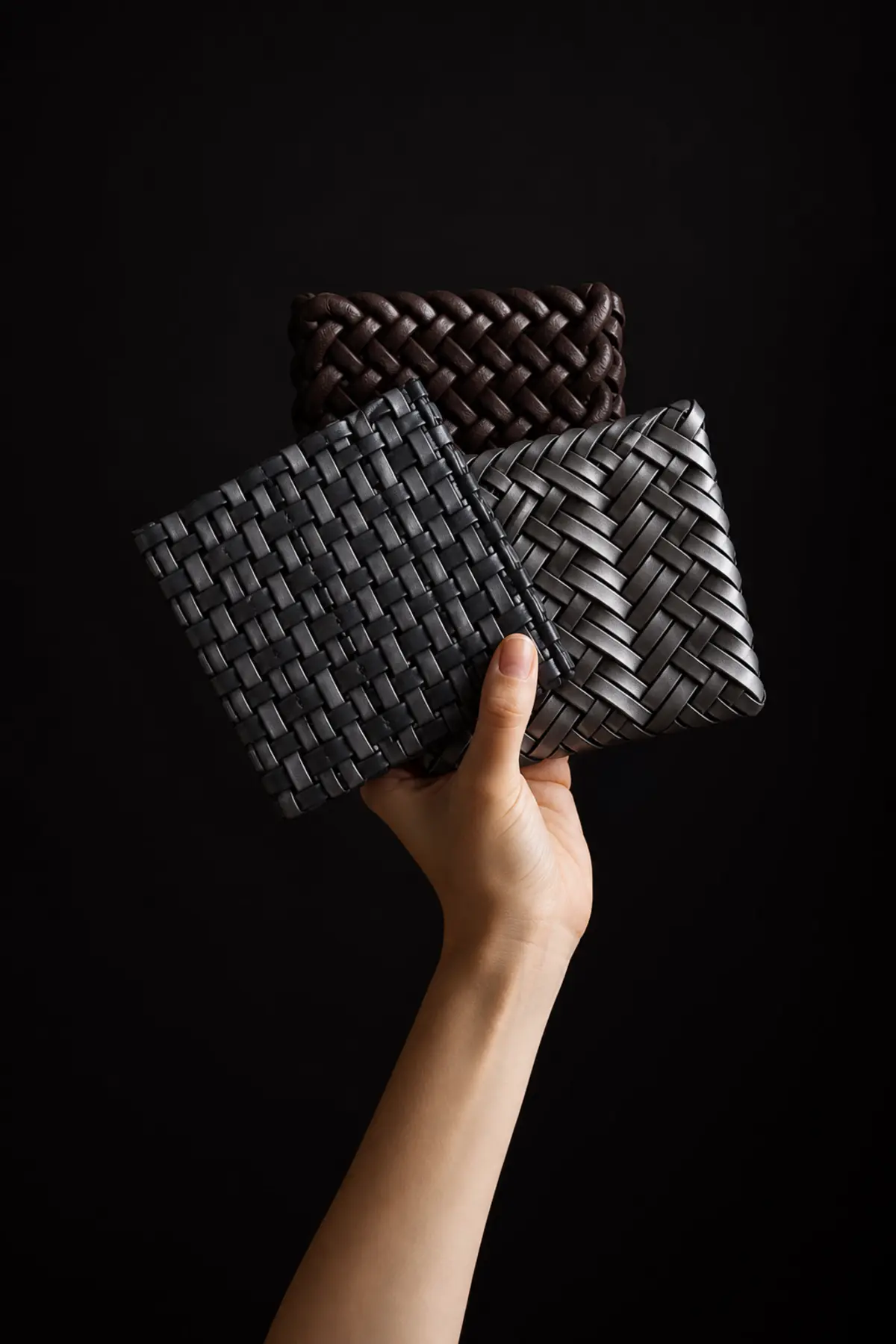
Before diving into the data, it helps to be precise. "Synthetic rattan" covers a wide spectrum. At the low end: thin PVC strips prone to cracking and fading within two seasons. At the high end: HDPE-based profiles compounded with UV stabilisers, pigment concentrates, and — in some formulations — flame retardant or anti-chlorine additives.
The comparison below assumes high-quality synthetic rattan (HDPE compound, UV-stabilised) against natural rattan of equivalent grade. Generic plastic weaving material is a separate category and not worth specifying.
Head-to-Head: The Numbers That Matter
UV & Weather Resistance
Natural rattan is inherently vulnerable to prolonged UV exposure. Without regular sealing and controlled humidity, fibres dry out, crack, and lose structural integrity. In tropical climates — high UV index year-round, high humidity, frequent rain — natural rattan outdoors will typically require refinishing within 12–18 months and replacement within 3–5 years.
Synthetic rattan (HDPE, UV-stabilised) is engineered for exactly these conditions. Independent lab testing under ASTM G154-23 — 1,500 hours of accelerated UV-B exposure — shows colour retention at Grey Scale rating 4–5/5. That figure represents several years of real-world tropical sun without meaningful degradation.
For any outdoor specification in Southeast Asia, the Middle East, or other high-UV environments, this difference is decisive.
Maintenance
Natural rattan requires periodic cleaning with appropriate products, re-sealing or lacquering, and protection from prolonged moisture. For residential projects with attentive owners, this is manageable. For hospitality — where furniture is in continuous use and maintenance windows are narrow — it becomes a liability.
Synthetic rattan requires nothing beyond occasional cleaning with mild soap and water. No sealing, no seasonal treatment, no special storage.
Chlorine & Moisture Compatibility
This is a specification detail that catches designers by surprise. Pool-area furniture — sunbeds, lounge chairs, side tables — is continuously exposed to chlorinated water through splash, spray, and direct contact.
Natural rattan and standard synthetic rattan are not compatible with this environment. The fibres degrade, and standard polymer formulations are also affected over time.
Anti-chlorine synthetic rattan — a specific compound variant — is engineered for direct water exposure. It is the only material that makes sense for pool-area specification. Natural rattan is simply not an option here.
Colour Range & Consistency
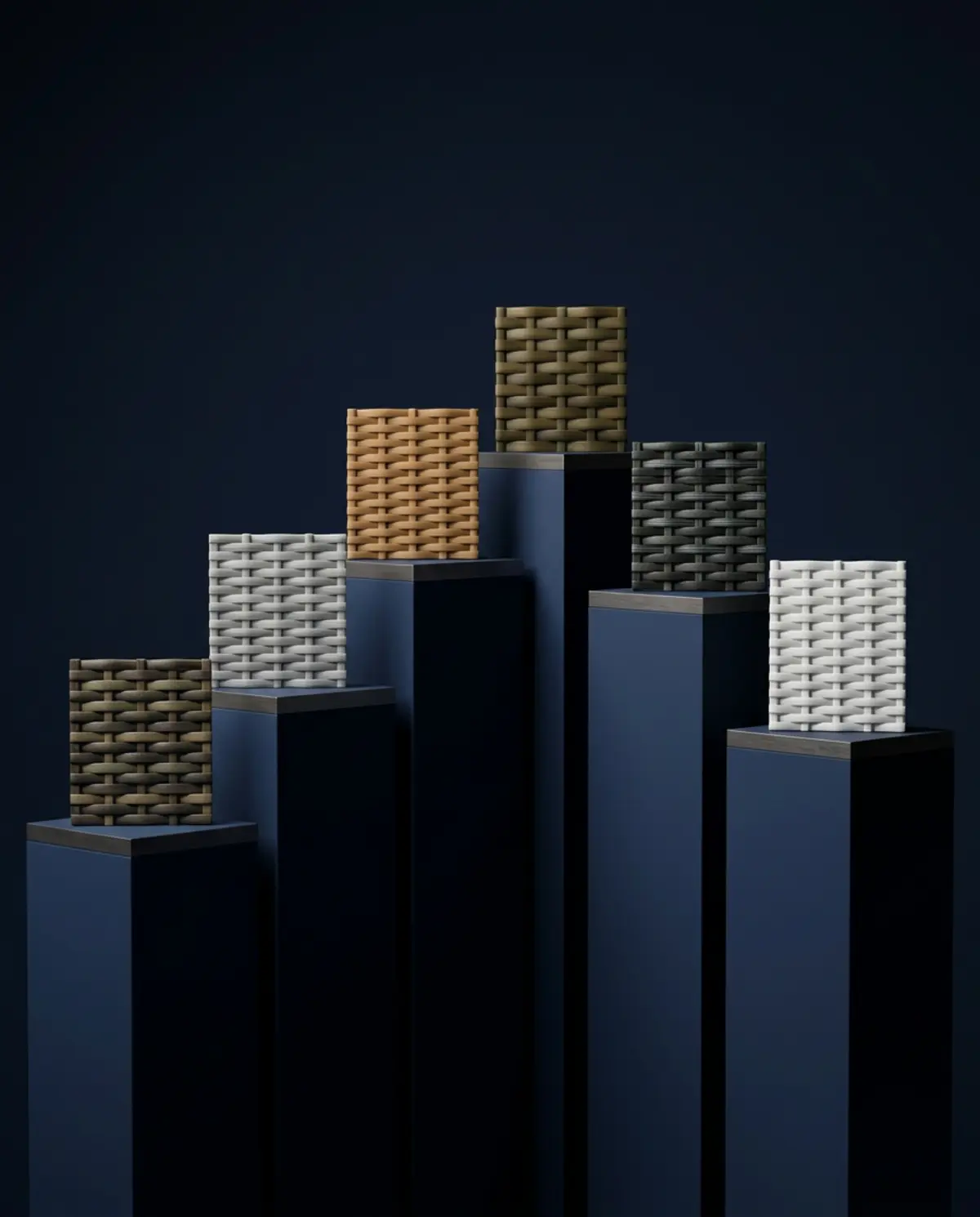
Natural rattan comes in its natural tones — warm honey to dark brown — with limited options for colour customisation. Staining is possible but adds a maintenance layer.
Synthetic rattan is produced with pigment concentrates mixed directly into the polymer compound. This means colour is consistent throughout the profile (not a surface treatment), available in a wide range of tones, and will not peel or chip. For brand-specific colour specifications — hospitality groups with design standards, furniture brands with colour systems — this matters.
Sustainability
This is a nuanced point, and honesty is important here.
Natural rattan is a fast-growing plant material. Sustainably sourced rattan is genuinely renewable and biodegradable. For projects with strict material origin requirements, this carries real weight.
Synthetic rattan is a polymer product. However, HDPE is one of the most recyclable plastics in common use, and some manufacturers — including Nextouch — offer formulations with recycled content for projects that need to comply with EU REACH or sustainability mandates from project owners.
Neither material has a clear, universal advantage here. The right answer depends on your project's specific sustainability criteria.
Lifecycle Cost
This is where synthetic rattan's case becomes most compelling for commercial projects.
| | Natural Rattan | Synthetic Rattan (HDPE) | |---|---|---| | Initial cost | Lower–medium | Medium–higher | | Annual maintenance | Significant | Minimal | | Replacement cycle | 3–5 years (outdoor) | 8–12+ years | | 10-year total cost | High | Low |
For hospitality and high-traffic commercial projects, the 10-year cost picture typically favours synthetic rattan significantly — even when the upfront unit cost is higher.
When Natural Rattan Still Makes Sense
We said this article would be honest, and we mean it.
Natural rattan remains the right call for:
- Indoor residential spaces — particularly living rooms, dining rooms, and bedrooms where UV exposure is minimal and the client will maintain the piece
- Heritage or craft-focused projects — where the material story and the hand of the craft is part of the brief
- Short-term installations — events, pop-ups, temporary exhibitions where longevity is not the primary consideration
- Clients who specifically want it — some clients value natural materials intrinsically, and that preference deserves respect
The Specification Checklist
Before committing either way, these are the questions worth asking:
- Where will this furniture live? Fully outdoors, semi-covered, or primarily indoor?
- What is the UV exposure level? Tropical / high-UV climates are a strong signal toward synthetic.
- Is there water or moisture contact? Pool areas and marine environments require anti-chlorine compound.
- Who is maintaining it? Hospitality operations and commercial projects benefit from low-maintenance materials.
- What is the replacement timeline? Short-term vs. long-term thinking changes the cost equation entirely.
- Are there sustainability requirements? Understand whether these favour natural origin, recyclability, or recycled content.
A Note on Material Quality
One clarification worth making: "synthetic rattan" is not a single product. The gap between a low-cost PVC strip and a properly compounded HDPE profile — in terms of UV performance, structural stability, and surface quality — is enormous.
When specifying synthetic rattan, ask for lab data. UV exposure results, tensile strength, and compound specification should be available from any serious supplier. If they are not, that is information too.
Nextouch is a B2B manufacturer of synthetic rattan and premium rope, produced at our factory in Indonesia. Our materials are tested by SGS — an independent testing and certification body operating in more than 140 countries. Lab reports are available to qualified procurement teams under standard NDA.